Craftsmanship & Production
Since 1929, blind and visually impaired craftspeople have created quality products at Blindes Arbejde. With our hands as our most important tool, we use natural materials and time-honored craftsmanship to make products that last.
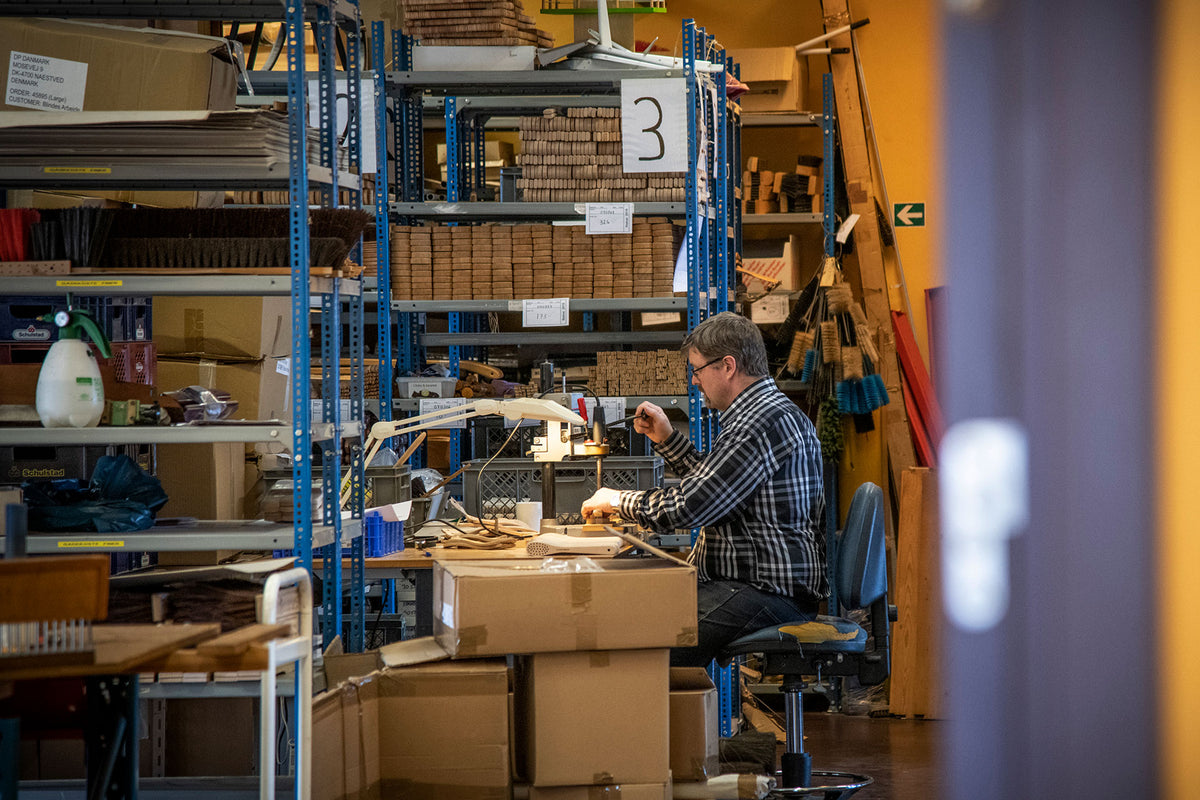
Brush binding
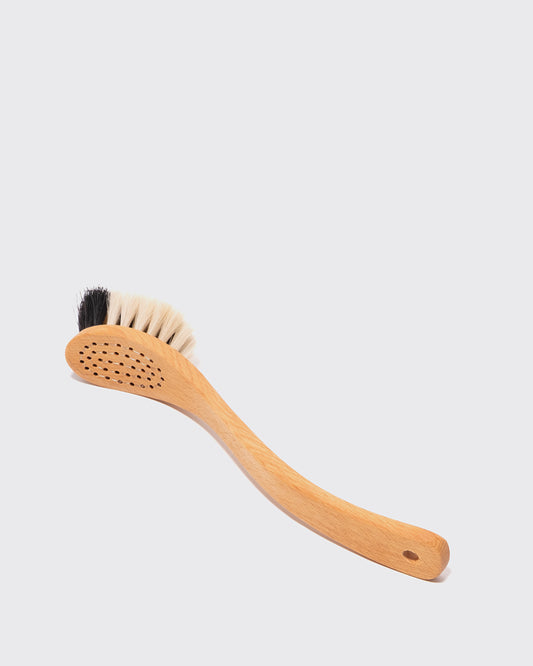
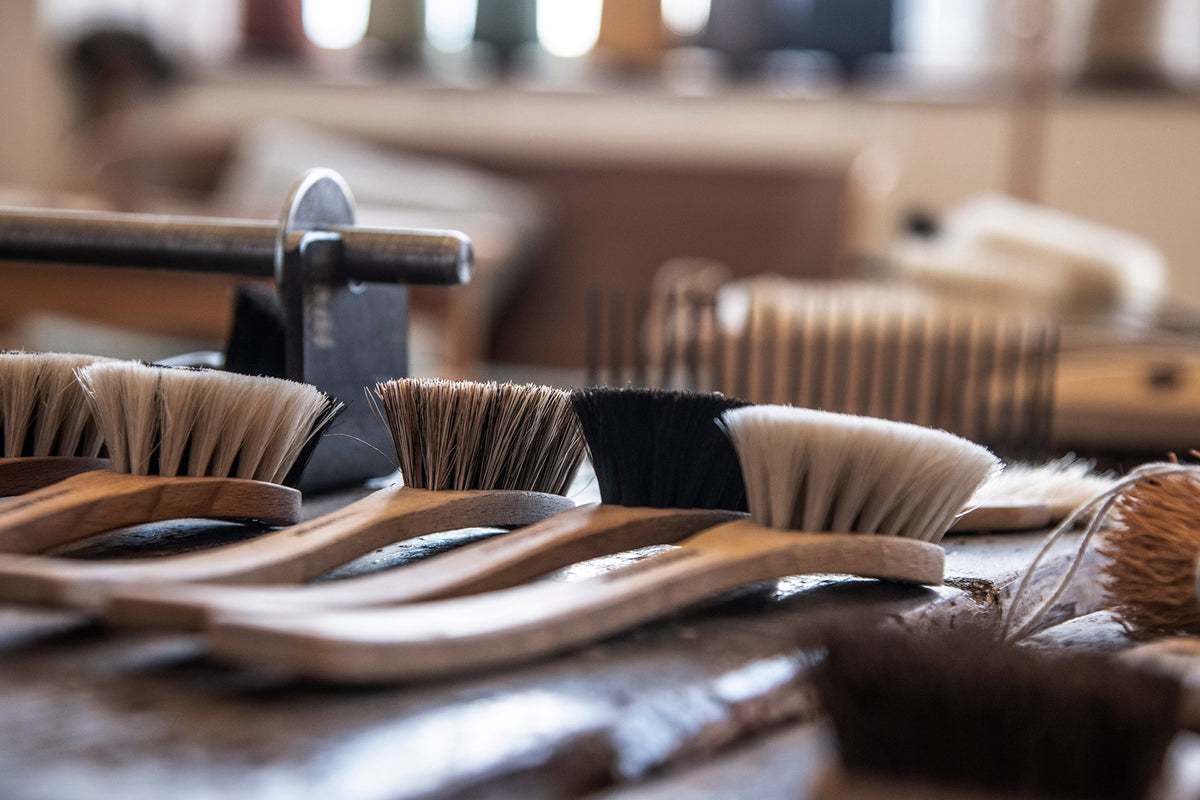
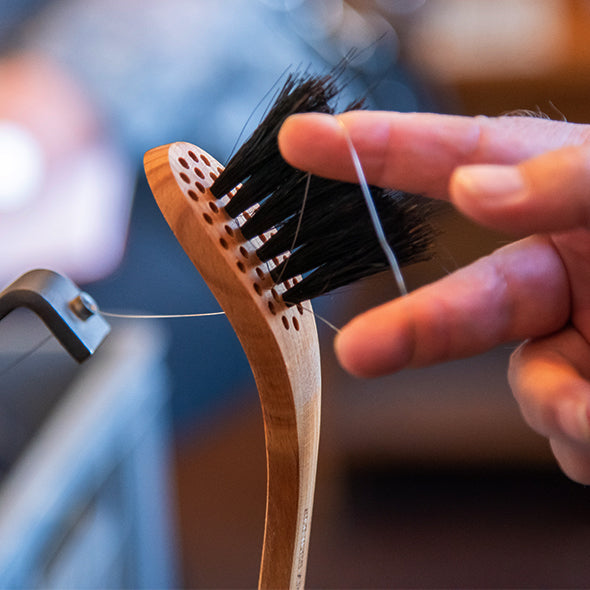
Our brushes are hand-bound. This means that the material is manually secured in the wood with twine or steel wire. This creates a strong construction that machines simply cannot deliver.
Quality is created by hands that see the world through touch. Along the way, even the smallest details are felt, so the material is bound tightly and evenly throughout the brush.
We work with carefully selected natural materials and manufacture our brushes and brooms with a focus on functionality and long durability.
Weaving
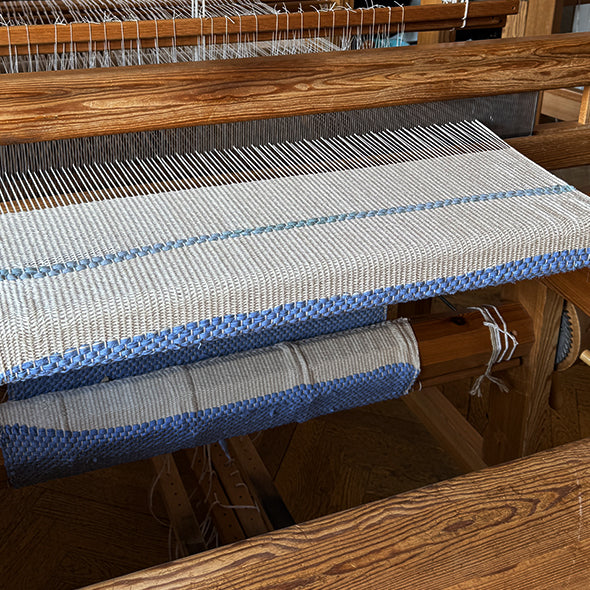
In our weaving shed, we work on large floor looms, using our hands, feet, and whole bodies. Here, our blind and visually impaired weavers combine technique, experience, and a keen sense of materials.
Weaving is a traditional craft in which threads and yarns are woven together to create a piece of fabric. Little by little, the textile takes shape on the loom, while the choice of materials, colours, and weaving technique gives each piece its own character and texture.
In the weaving shed, we primarily make rag rugs from fabric scraps, as well as cotton and linen tea towels.
Chair caning
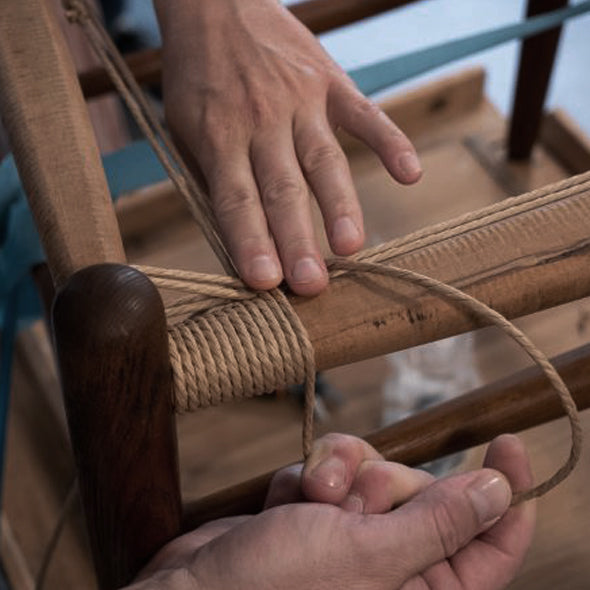
Chair weaving requires precision, experience, and a special understanding of the material. Our blind and visually impaired craftspeople have extensive expertise in weaving chair seats, ensuring a tight, uniform result that is true to the chair's original design.
We professionally reweave classic designer chairs, including those by Wegner and Børge Mogensen. Many of these iconic chairs have their own distinctive weaving patterns, which our craftspeople know by heart.
We work with a variety of patterns, including envelope, checkerboard, and double weaving, and primarily use paper cord. During the process, visual compensation techniques are used, with the sense of touch playing an important role.
In this way, traditional weaving techniques are combined with many years of experience and a strong feel for the material.
Production and materials
We have workshops in several locations across the country, with our main production based in Copenhagen, as well as workshops attached to several of our stores. All products are quality-checked during production and again before they enter inventory and are prepared for sale.
We are very mindful of the materials we use in our products. We therefore select them carefully, with a focus on functionality, quality, and durability.
For our brushes and brooms, we use animal hair from horses, pigs, and goats, as well as natural fibers such as bahia, arenga, bassine, and tampico. The animal hair is inspected by veterinarians and heat-treated to preserve its structure and properties, while the natural fibers are selected based on the intended function of the brush or broom.
We mainly use PEFC-certified beechwood and ash. Brushes used outdoors or for wet cleaning are treated with linseed oil or beeswax to protect the wood and extend its lifespan.
In our weaving workshop, we work with organic cotton, linen, and wool, among other materials. For our rag rugs, we reuse fabric scraps and use GOTS-certified yarn, which meets environmental and social requirements throughout production.
For chair caning, we primarily use paper cord. It is a durable material that is well-suited to the craft and is used on many classic Danish pieces of furniture.
A story from everyday life
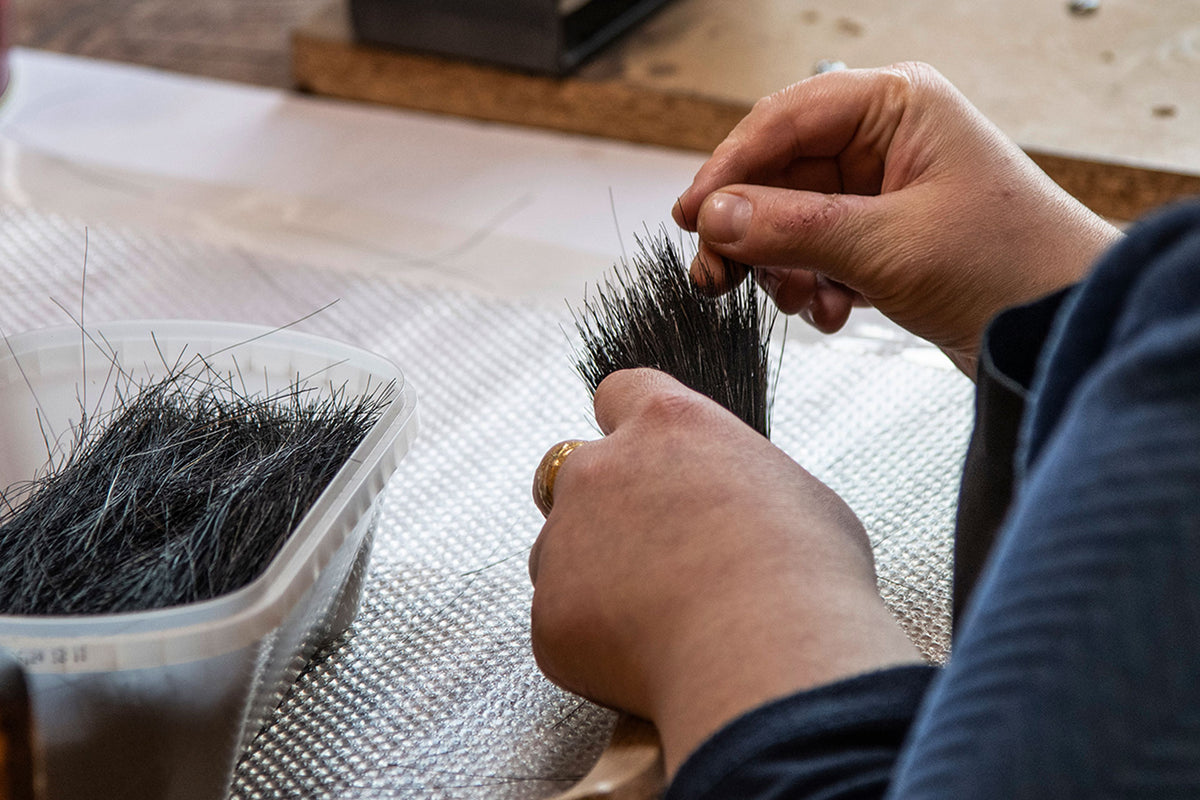
Lis is a brush maker. She arrives early and rarely leaves before 4 p.m. Lis sits at a small workbench, holding a taut steel wire attached to a screw mechanism in the center of the table.
There is a pile of horsehair, a stack of raw beechwood brush handles with carefully pre-drilled holes, and a sparse selection of tools. It is clear that Lis's hands are highly practiced, for with a deft finger movement she twists the horsehair around the steel wire, and with a firm little tug the horsehair is secured in one of the holes in the dish brush.
Lis smiles and shows clear enthusiasm that the task is completed, while at the same time reaching for another small bundle of horsehair to be pulled into the next hole.
When all the holes in the brush handle are filled, Lis checks that the hair length is just right; she feels, senses and controls whether the quality is up to standard, and with a big smile she exclaims "Now you are a dishwashing brush!".
By then, the wood of the brush has been through several processes, where it is stamped, sanded and waxed with beeswax or oiled with linseed oil.
Lis wants to make a difference with what she can. She has found her niche, found her calling and works with perfectionism, dedication and pride as a brush maker.